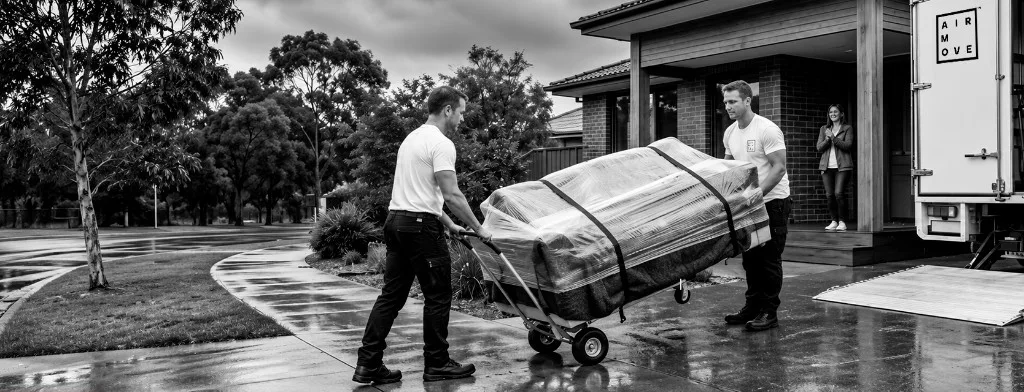
Moving House in the Rain and How to Keep Your Stuff Dry

Everyone in Melbourne has a weather story. Sunny at breakfast, hail by lunch, a rainbow by dinner, and somehow all of it landed on your moving day. It feels personal, especially in spring. If you are moving house in the rain, or you are worried you might be, take a breath. A wet day is annoying, but it is manageable with a little planning. This guide covers what the weather does to a move, how to protect your things and how to stay safe on slippery ground. If you want a hand on the day, take a look at our local house moving service.
Why Melbourne’s spring weather loves moving day
Melbourne’s reputation for four seasons in a day is earned. According to the University of Melbourne, October and November are the city’s wettest months, with the most days of rain above 10 millimetres, and spring brings more wind and thunderstorms than the colder months.
Some springs are wetter than others. The Bureau of Meteorology recorded 224 mm of rain at Melbourne Olympic Park in spring 2025, which was 135% of the long-term average. See the Bureau’s spring summary for the full numbers.
The lesson is simple. If you are moving in spring, plan for rain, even if the week looks sunny.
Check the forecast and pick a plan B
Moving on a rainy day starts well before the truck arrives. A few days out, check the forecast on the Bureau of Meteorology site and look again the night before and the morning of the move.
Decide your plan in advance:
- Light rain. Go ahead with extra protection for your furniture and boxes.
- Heavy rain or storms. Talk to your driver about delaying or rescheduling.
- Changeable weather. Pack so that items can be moved fast during the dry patches.
Tell your driver about the weather early, so they can plan the vehicle and the timing. If your move has a hard deadline, such as a lease handover, build in some wiggle room.
Moving in the rain tips to protect your belongings
The good news is that most things survive a wet move when they are wrapped properly. These moving in the rain tips cover the items people worry about most.
ConsumerAffairs suggests wrapping furniture in plastic stretch film and using sealed plastic bins instead of cardboard boxes. Cardboard turns soft quickly when wet, so anything heavy is better off in plastic.
| Item | How to protect it | What to avoid |
|---|---|---|
| Mattress | A sealable mattress bag, since mattresses are heavy and prone to water damage | Carrying it bare, even for a short dash |
| Couch and upholstery | Plastic stretch film, taped securely | Leaving fabric exposed on the path to the truck |
| Leather and wood furniture | A moving blanket first, then plastic stretch wrap | Plastic pressed straight onto bare wood or leather |
| Boxes | Sealed plastic bins, or boxes wrapped in plastic | Stacking cardboard on wet ground |
| TV and electronics | Original box if you have it, plus a plastic cover | A thrown-on blanket, which will not keep rain out |
One common mistake is relying on blankets alone. Moving blankets protect against bumps, but they are not waterproof, so wrapping items in plastic is the better choice.
For more detail, see the ConsumerAffairs rain moving guide and the U-Pack rainy day guide. Our boxes and small stuff service can also help with the little things that are easy to lose track of in the rain.
Keep people safe on wet surfaces
Wet weather is hard on belongings, and it is harder on people. WorkSafe Victoria says the further people carry heavy things, the more likely they are to slip, trip or fall, and the risk rises on stairs, slopes and surfaces that are wet or muddy. Its guidance also recommends minimising the handling of loads outdoors in wet weather.
A few easy habits help:
- Wear shoes with good grip, not worn-out runners.
- Put towels or mats at the door so wet feet do not slip on the hallway floor.
- Clear the path from the door to the vehicle before carrying anything.
- Take it slow on steps and ramps, and use a second person for long or awkward items.
- Keep umbrellas out of your hands when carrying. A hood or rain jacket works better.
Load smart and keep the truck dry
How you load matters nearly as much as how you wrap. Check the back of the vehicle for leaks before loading, and keep moisture-sensitive boxes off the floor. Keeping furniture off the ground and loading it last means it spends less time outdoors.
If you are unsure what size vehicle your move needs, our truck size guide can help. For bigger items like wardrobes and couches, a team from our furniture removalists page can take care of the carrying.
Once you arrive, unload the most water-sensitive items first and move them straight inside. Leave the wrapping on until the item is indoors, then unwrap and let everything air out.
Book a driver who plans for wet weather
When you book a mover, ask about wet weather. Useful questions include whether they have a rainy-day policy, and whether they bring waterproof supplies like plastic wrap and tarps. A driver who plans for rain will usually keep the day moving smoothly.
Download the Airmove app from the App Store or Google Play, or book now online. Add a note about the weather and any access issues when you book.
Make the weather someone else’s problem
Moving house in the rain is more about preparation than luck. Check the forecast, wrap everything in plastic, keep your footing and pick a driver who plans for wet days. When you are ready, visit Airmove and book your move.
Sources: University of Melbourne, Melbourne’s weather explained · Bureau of Meteorology · WorkSafe Victoria, preventing slips, trips and falls · ConsumerAffairs, tips for moving in the rain · U-Pack, moving on a rainy day